
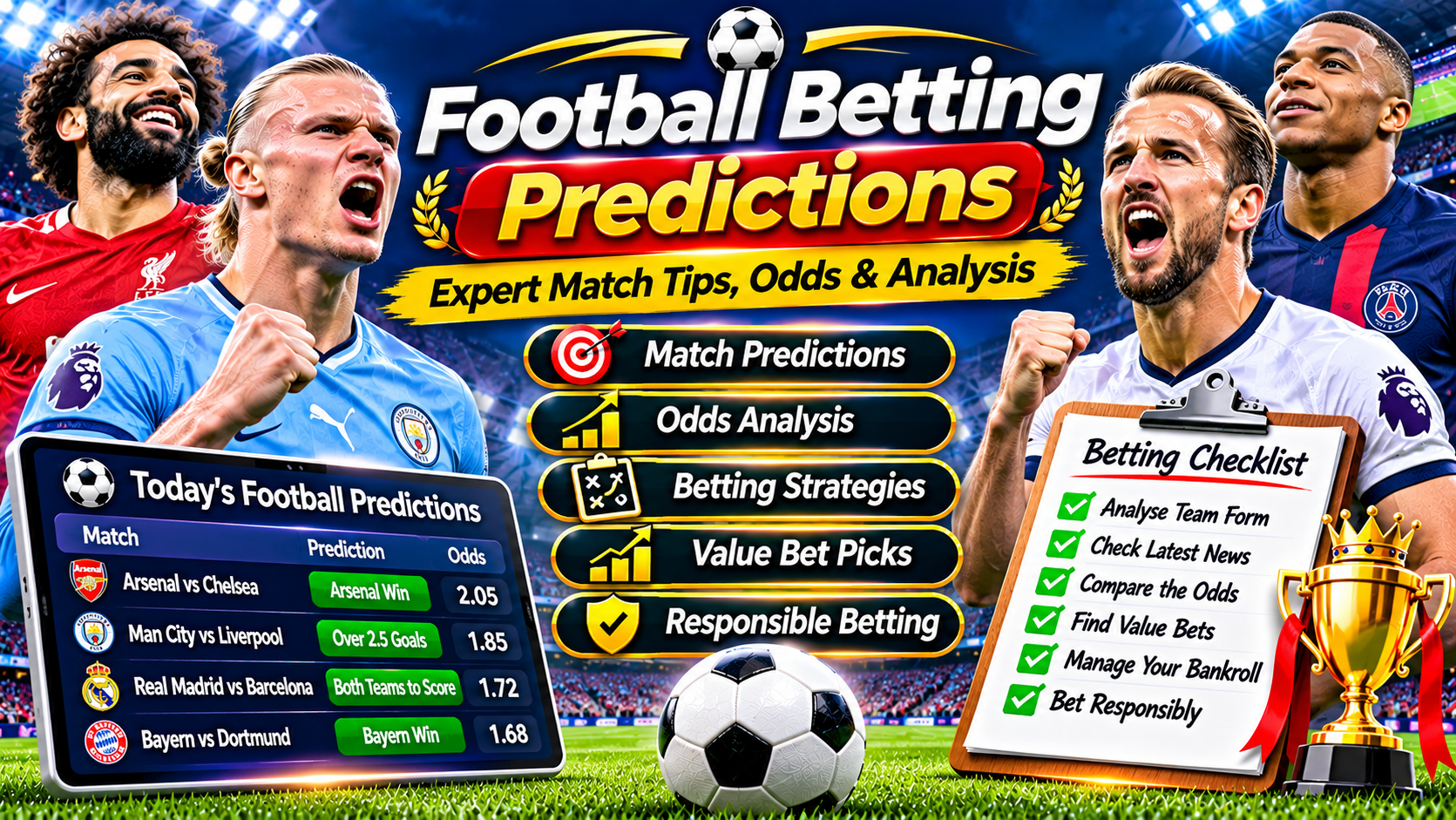
Problem: Why Most Tips Fail in Real Betting Markets
Many bettors lose money because they treat predictions like a single guess instead of a decision built on evidence. A common mistake is relying on one highlight stat, like a top scorer’s recent form, while ignoring how that player Football Betting Predictions fits the team’s tactics. When the match plan changes, those surface-level signals stop mattering quickly. The result is a bet that feels logical beforehand but collapses once lineups and game states shift.
Another issue is that odds move for reasons you might not be tracking. Market prices can react to injuries, travel news, weather, or even referee assignments, and your “locked-in” assumption may already be out of date. Without a structured approach, you end up chasing value after the moment has passed. The solution is to convert vague research into a repeatable process that matches how bookmakers actually price risk.
Solution: Build a Match Preview From Market-Ready Inputs
A strong preview starts by mapping team styles to match conditions, not just collecting results. Look at how each side creates chances—through wide play, central combinations, set pieces, or transitions—and then compare that to the opponent’s defensive behavior. For example, a team that presses high may generate early shots, but it also risks counters if they lose shape after turnovers. When you align tactics with likely phases of the game, your picks become more resilient to randomness.
Next, integrate lineup uncertainty and motivation factors into your model. If a key defender is doubtful or a starting midfielder typically controls tempo is missing, the bet should reflect the new game script. You can also use role consistency, such as whether the fullbacks attack behind the winger or hold a conservative line. Finally, translate your analysis into specific markets—like double chance, totals, or both teams to score—so the bet matches the type of edge you identified.
Expert Angle: Team Form, Odds Signals, and Goal Market Logic
Form matters, but the way you measure it matters more. Instead of only checking wins and losses, evaluate chance quality: shots on target, shot volume, and how often the team concedes big chances. A team can be “in form” because they benefited from finishing luck, while another may look poor but still generate dangerous attacks. When you compare underlying indicators to the matchups, you reduce the odds of getting fooled by short-run noise.
Odds provide a second layer of confirmation when interpreted correctly. If the market heavily favors one side to win, you may look for safer alternatives like a draw-inclusive spread or a partial goal line approach. For totals, consider how both defenses handle pace and whether one team tends to concede in transition or after set plays. Goal markets can be particularly valuable when you expect a specific scoring pattern, such as one team dominating possession but struggling to convert under pressure.
Practical Betting Plan: Stake Sizing, Timing, and Risk Controls
Even the best analysis can lose if your stake sizing is unmanaged. Use a fixed fraction method, where you risk a small percentage of your bankroll per bet, rather than betting the maximum you can afford. This prevents a short losing streak from destroying your longer-term ability to keep making informed decisions. If you combine multiple bets, make sure they are not all dependent on the same outcome thread, like one team scoring early.
Timing also affects outcomes. If you wait for every price to become “perfect,” you may miss the best window, but if you bet instantly without verification, you may overpay. A balanced approach is to check how odds respond to late news and compare your estimated probability range to the implied odds. When your edge is thin, choose a market with less variance, and when your edge is strong, consider stepping up only within your pre-set risk limits.
Conclusion
Reliable betting starts with solving the real problems that cause most losses: shallow research, misunderstood odds, and unmanaged risk. By building previews from tactical fit, lineup uncertainty, and market-ready inputs, you convert opinions into decisions. Then you choose goal and match markets that reflect the specific scoring logic you expect, rather than forcing a bet into a narrative that doesn’t match the game. Use disciplined stake sizing and careful timing so your process survives bad runs and keeps you in control. If you keep refining your indicators and focus on decision quality, your selections will become more consistent and your risk will feel far more predictable.