A wet stain on a shared townhome wall raises two questions at once. Where is the water coming from, and whose problem is it?
The answer to the second depends almost entirely on the first. Here’s how to work through both without losing weeks to back-and-forth.
Stop the Spread First
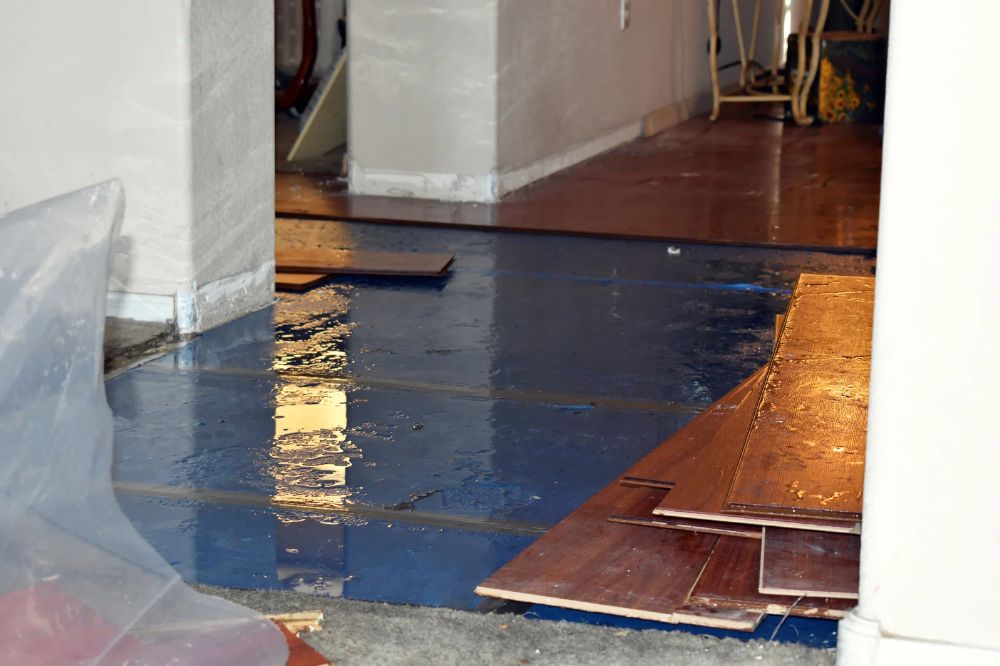
Before anyone argues about money, limit the damage. Move furniture and rugs away from the wall and take photos of the stain, the baseboard and the floor.
Then knock on your neighbor’s door. Most wall leaks between townhomes start on one side, and your neighbor may have no idea there’s a problem.
Find Out Where the Water Starts
Common sources behind a shared wall include:
-
A supply line or valve leaking inside the wall
-
A shower pan or tub on the other side of the wall
-
A washing machine hose or water heater in the neighbor’s unit
-
A roof, flashing or gutter problem where the units meet
-
Rain driven through a gap in the exterior wall
A moisture meter and thermal camera can show which side of the wall is wetter and how far it reaches. That reading often settles the first argument before it starts.
Check Your Community’s Documents
Townhomes aren’t all set up the same way. Some communities are condominiums, and others are homeowners associations with each owner holding the lot under the unit.
The declaration and bylaws spell out who maintains the roof, exterior walls and shared plumbing. Pull them out early, because they often answer the “who pays” question in a single paragraph.
Who Usually Pays
|
Source of the water |
Usually pays first |
Notes |
|---|---|---|
|
Your own pipe or fixture |
You and your insurer |
Sudden leaks are often covered |
|
Your neighbor’s pipe or fixture |
Your neighbor or their insurer |
Your insurer may pay you, then seek repayment |
|
Roof or exterior the association maintains |
The association |
Depends on the declaration |
|
A slow leak nobody reported |
Often disputed |
Long-term seepage is commonly excluded |
Your own policy is usually the fastest route to repairs, even when a neighbor caused the leak. Your insurer can pay the claim and then pursue the neighbor’s insurer, a process called subrogation.
Why Timing Changes the Answer
Most homeowners policies cover water damage that’s sudden and accidental, like a burst supply line. They treat slow leaks differently.
Many Florida policies exclude damage from seepage that continues for 14 days or more. A stain that has been spreading for a month can turn a simple claim into a fight.
Cesar Hernandez Jr., Head of Operations at Florida Mitigation Group, puts the timing plainly.
“When water shows up on a shared wall, the first few days decide how the claim goes,” he says. “Measure the moisture, photograph both sides of the wall and get it drying, then sort out who pays with real evidence in hand.”
Talk to Your Insurer Early
Call your agent or insurer as soon as you know water got into your unit. Florida gives you one year from the date of loss to report a new claim, but early reports are easier to prove.
The Florida Department of Financial Services publishes free consumer guides on homeowners insurance and filing a claim. They’re worth a read before you speak to an adjuster.
What Repairs Usually Involve
Wet drywall at the base of the wall often has to be cut out so the wall cavity can dry. Insulation that soaked up water usually comes out too.
The framing and slab are dried with dehumidifiers and air movers until moisture readings return to normal. Only then should drywall, paint and baseboards go back in.
If the wall stayed wet for more than a couple of days, check for mold before closing it up. Covering hidden growth with new drywall just moves the problem out of sight.
A Short Checklist
-
Photograph the wall, floor and baseboards on day one
-
Tell your neighbor and the association in writing
-
Get moisture readings that show where the water is coming from
-
Read the declaration for maintenance responsibilities
-
Report the loss to your insurer and get a claim number
-
Keep every estimate, invoice and email in one folder
Shared walls make water damage more complicated, but the steps are the same. Find the source, document it and dry it fast, and the question of who pays gets much easier to answer.